Managing a toddler hungry at bedtime scenario requires gentle, consistent evening routines that distinguish genuine nutritional hunger from classic bedtime stalling tactics. When a young child announces they are starving moments after tucking into bed, parents often feel torn between the worry of an empty stomach and the frustration of disrupted sleep schedules.
This common evening dilemma frequently occurs during the toddler years. A toddler may barely touch their evening dinner, play cheerfully for an hour, and then suddenly become inconsolable about food the instant the bedroom lights dim. Parents naturally worry that an unfed child will wake repeatedly throughout the night or suffer nutritional deficiencies, prompting rushed kitchen trips for bedtime snacks.
Pediatric nutrition guidance on HealthyChildren.org recommends offering three meals and two to three snacks a day, spaced at least two hours before meals so children arrive hungry. At night, young children often use requests for food or water to postpone bedtime. Implementing core tenets of toddler picky eating helps parents establish peaceful evening boundaries without guilt.
Solving bedtime hunger requires a balanced strategy: offering a predictable, low-excitement evening snack built directly into your schedule while holding firm boundaries around the kitchen closing. Pairing this approach with an organized picky eater meal plan ensures children receive adequate daytime calories, allowing both parents and toddlers to enjoy restful, uninterrupted nights.
Distinguishing Genuine Hunger from Bedtime Delay Tactics

To address evening food requests effectively, caregivers must first understand what is genuinely driving the behavior. In many instances, declaring hunger right at lights-out is less about physical starvation and far more about separation anxiety and cognitive stalling. Toddlers love the warmth, presence, and undivided attention of their parents, and asking for food reliably brings a caregiver back into the room.
However, genuine physiological hunger can also occur, particularly if dinner was served early, if the child was overtired during dinner, or if an intense growth spurt is underway. A child who ate dinner at five in the afternoon and goes to sleep at eight in the evening has experienced a three-hour gap, which can cause legitimate tummy rumblings in a small body. Recognizing the subtle differences between true hunger and bedtime stalling empowers you to respond appropriately.
Signs of Developmental Bedtime Stalling
Bedtime stalling usually reveals itself through specific behavioral clues. If your child suddenly remembers their hunger only after being placed in their crib or bed, stalling is likely at play. Furthermore, if the child vehemently rejects plain, boring foods like oatmeal or whole wheat toast and insists strictly on sweet treats or dessert snacks, hunger is not the primary motivator.
Children quickly recognize which levers evoke parental concern. Because parents desperately want their children to be well-nourished, expressing hunger is one of the most effective tools a toddler can wield. Acknowledging this reality without anger allows you to handle requests with calm consistency.
Indicators of Physical Evening Hunger
Conversely, physical hunger is characterized by a willingness to consume plain, simple foods without complaint. A genuinely hungry child will gladly eat a slice of plain toast, a hard-boiled egg, or a bowl of warm unsweetened oatmeal. Their physical energy may appear depleted, and they may show genuine relief when offered modest sustenance.
Evaluating daytime caloric intake also clarifies the situation. If your child was distracted or fussy at dinner after an active day of outdoor play, their body may simply need a small nutritional bridge to sleep comfortably through the night. Our comprehensive guide on ending dinner power struggles in how to stop cooking two meals outlines how to set up satisfying family dinners that curb nighttime cravings.
Establishing a Predictable and Boring Bedtime Snack Routine
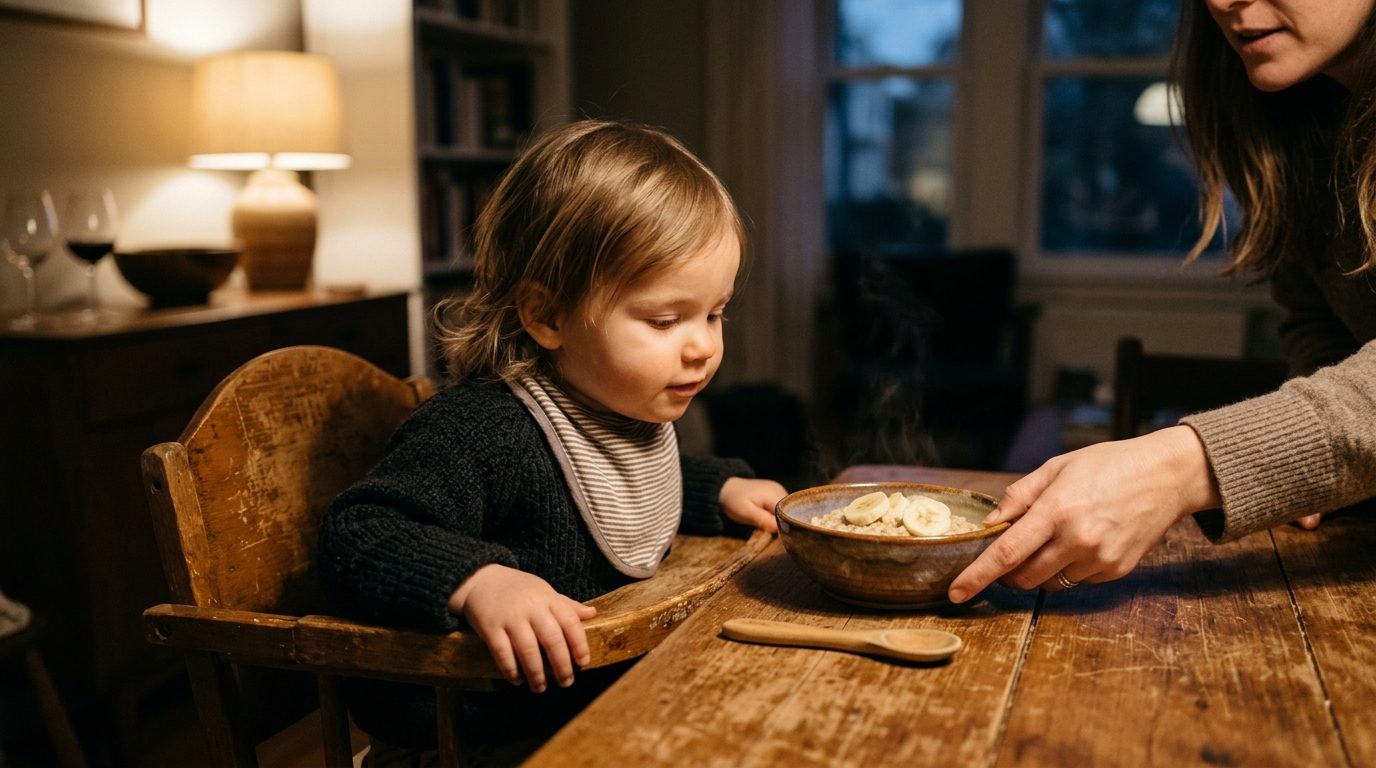
The single most effective tool for neutralizing bedtime food battles is instituting a scheduled, predictable bedtime snack offered before bedtime. Rather than waiting for your child to plead for food from their bed, make an evening snack a regular, anticipated part of the evening wind-down routine for every family member.
Crucially, the bedtime snack must be intentionally boring. If the snack consists of sweet yogurt pouches or sugary cereals, children will intentionally refuse dinner knowing a delicious treat awaits them later. In contrast, serving boring, nutritious foods ensures only truly hungry children partake, completely eliminating the incentive to skip dinner.
Serve the bedtime snack at the dining table with bright lights dimmed to signal approaching sleep. Keep the atmosphere quiet, calm, and free from televisions, tablets, or exciting toys. Once snack time concludes, guide your child to brush teeth, proceed directly to the bedroom, and gently close the kitchen for the night.
Nutrient-Dense Foods for Sleep and Satiety
Select bedtime foods that combine carbohydrates with gentle proteins and healthy fats to provide steady, satisfying nourishment before sleep.
Excellent evening choices include a slice of whole wheat toast with mashed avocado, a small cup of milk suitable for your child’s age, a half cup of warm oatmeal, or sliced bananas. These comforting choices settle small bellies without triggering digestive discomfort or energetic sugar spikes.
Strict Safety Standards and Safe Textures
Safety remains paramount whenever toddlers consume food. The Centers for Disease Control and Prevention highlights critical hazard prevention on CDC.gov, reminding caregivers to modify all foods served to young children.
Always ensure bedtime foods are soft and properly portioned. Never serve hard or sticky foods that pose choking risks to tired children. Slice soft bananas into thin discs, shred cheese finely instead of cutting thick slices, and ensure your toddler remains seated upright throughout the entire snack.
Setting Firm Boundaries and Closing the Kitchen

Once the scheduled bedtime snack concludes and teeth are brushed, the kitchen must officially close. When your child inevitably calls out from bed ten minutes later claiming starvation, respond with empathetic firmness. Acknowledge their feelings while holding the boundary without waiver.
You can say calmly: “I hear that your tummy feels empty, but the kitchen is sleeping now. We had our bedtime snack, and we will have a wonderful breakfast in the morning.” Offer a sip of plain water from a bedside cup, adjust their blankets, provide a gentle hug, and exit the room. Consistency over three to four nights teaches the child that bedtime calls will not yield food or entertainment.
If you give in and prepare food after lights-out, you inadvertently teach your child that persistent crying or protesting successfully reopens the kitchen. Maintaining the boundary lovingly builds security and predictability. Review our foundational analysis of the division of responsibility in feeding to gain confidence in setting loving food boundaries.
Optimizing Daytime Meal Intervals to Prevent Evening Hunger
Preventing evening hunger battles often begins hours earlier during daytime routines. When toddlers are allowed to graze continuously on snack crackers, fruit snacks, and milk throughout the afternoon, their dinner appetite is completely destroyed. Consequently, they reject dinner, only to experience sharp hunger pangs as bedtime approaches.
Implementing a structured daily schedule with two-and-a-half to three-hour intervals between meals restores natural hunger rhythms. Ensure your afternoon snack concludes at least two to three hours before dinner is served. When children arrive at the dinner table with genuine appetite, they eat more substantial portions of protein and fiber, naturally sustaining them until morning.
Limiting daytime beverage consumption is equally vital. Excessive milk or juice intake fills tiny stomachs with liquid sugar, displacing wholesome solid foods. Keep milk intake between sixteen and twenty ounces daily, and offer water as the primary beverage between meals to preserve appetite integrity.
When to Consult a Pediatrician About Sleep and Feeding
For the vast majority of toddlers, bedtime hunger is a brief behavioral phase that resolves quickly with consistent routines and boring snacks. However, persistent nighttime feeding demands accompanied by other concerning symptoms may indicate underlying medical or developmental considerations.
Consult your pediatrician if your child wakes repeatedly through the night demanding large quantities of food or milk. You should also seek clinical guidance if bedtime hunger is paired with poor weight gain, gastrointestinal reflux, chronic constipation, or daytime lethargy. A healthcare provider can review your child’s overall growth curve and offer tailored advice to support healthy sleep and nutrition.
Frequently Asked Questions
Why does my toddler refuse dinner but claim to be starving at bedtime?
Toddlers frequently refuse dinner due to evening fatigue, overstimulation, or afternoon grazing that dulls their appetite. Later, when the house quiets down at bedtime, they realize their stomach is empty or use food requests to delay sleeping. Offering a predictable, boring evening snack thirty minutes before bed resolves this challenge without power struggles.
What are the best bedtime snacks for a hungry toddler?
The best bedtime snacks combine complex carbohydrates and gentle proteins that promote satiety and restful sleep. Great choices include a slice of whole wheat toast with mashed avocado, a small bowl of warm oatmeal, sliced bananas, or a cup of warm milk. Keeping snacks intentionally plain ensures children only eat when genuinely hungry.
Should I let my child go to sleep hungry if they refuse dinner?
Offering a neutral, scheduled bedtime snack prevents toddlers from going to bed uncomfortably hungry while avoiding short-order dinner replacements. If a child refuses both dinner and the boring bedtime snack, you can confidently tuck them into bed knowing you offered ample nourishment. Most healthy toddlers will manage comfortably and eat a good breakfast in the morning.
When should parents talk to a pediatrician about nighttime eating?
Parents should talk to your pediatrician if nighttime hunger is accompanied by weight loss, failure to thrive, persistent vomiting, or extreme daily fatigue. You should also seek guidance if an older toddler cannot sleep without multiple bottles or substantial night meals. A medical professional can assess physical development and help establish healthy nutritional sleep routines.