Establishing a consistent toddler feeding schedule creates a predictable daily rhythm that helps young children arrive at the table with healthy appetites, emotional stability, and openness to exploring nutritious family foods. When young toddlers know when meals and snacks occur, their hunger cues align with scheduled table times, helping reduce constant grazing and stressful mealtime negotiations.
Between twelve and thirty-six months of age, children undergo significant developmental transformations. Physical growth slows down considerably compared to infancy, which naturally reduces overall caloric requirements and causes young appetites to fluctuate dramatically from one day to the next. Establishing structured meal intervals gives cautious children a reassuring framework where eating feels safe, predictable, and manageable.
According to pediatric feeding recommendations on HealthyChildren.org, toddlers do well with three meals and two snacks each day. This rhythm allows small stomachs to empty completely and rebuild genuine hunger before the next eating opportunity. Incorporating proven principles of toddler picky eating into your home routine transforms chaotic mealtimes into calm family connection.
Parents often worry that scheduled intervals might cause an active child to become overly hungry or irritable between meals. However, random snacking dulls the appetite and leads to frustrating meal refusal. Setting a reliable rhythm and pairing it with a supportive picky eater meal plan ensures children receive balanced nutrition without mealtime battles.
Daily Rhythm and Meal Timing for Growing Toddlers

Young children possess small stomachs and modest digestive capacities, so they cannot consume enough food at one single sitting to fuel several hours of intense physical activity. Maintaining regular intervals between each meal or snack helps keep energy steady without overwhelming young digestive systems.
When creating a practical daily schedule, consistency in timing matters far more than the exact hour on the clock. Anchor meal times around regular wake times, afternoon naps, and evening bedtime routines. A typical morning begins with breakfast after waking, followed by a mid-morning snack, a balanced lunch before naptime, an afternoon snack, and a family dinner.
Balancing Breakfast and Morning Snack Intervals
Morning nutrition provides essential fuel after overnight fasting and sets the biological rhythm for the entire day. Offering a breakfast rich in complex carbohydrates and gentle proteins stabilizes energy levels and supports cognitive focus during active play. Keep portions modest so your child feels comfortably satisfied rather than heavily weighed down.
Schedule your mid-morning snack approximately two and a half hours after breakfast concludes. Offer simple, hydrating foods such as sliced soft fruit paired with a small portion of shredded cheese or plain yogurt. Keeping morning snacks light ensures your child arrives at the lunch table ready to eat, as explained in our morning guide on serving breakfast for picky eater toddler routines.
Structuring Afternoon Naps and Evening Family Dinners
Afternoon nap timing directly influences hunger and dinner readiness. If an afternoon snack is offered too late in the day, or if milk is offered right before dinner, a toddler will naturally refuse the evening meal. Strive to conclude the afternoon snack at least two and a half hours prior to sitting down for family dinner.
This buffer allows your child’s digestive system to clear the previous snack. During dinner, serve one unified family menu with at least one familiar food your child comfortably accepts.
Sample Routine Chart for One and Two Year Olds

Visual routines provide immense comfort to parents and caregivers seeking a reliable framework. While individual family routines vary based on daycare, work schedules, and nap patterns, the following sample feeding guide outlines realistic times, nutrient-dense meal components, and fluid recommendations for typical toddlers.
A structured toddler feeding chart serves as a flexible roadmap rather than a rigid set of rules. Adjust times forward or backward by thirty minutes to accommodate your family’s daily lifestyle, while always preserving the two to three hour fasting interval between eating opportunities.
| Time of Day | Meal Event | Recommended Food Components | Healthy Beverage |
|---|---|---|---|
| 7:30 AM | Breakfast | Scrambled egg, soft whole grain toast strips, sliced ripe strawberries | Water or plain whole milk |
| 10:00 AM | Morning Snack | Plain whole milk yogurt, soft steamed pear cubes | Water in open cup |
| 12:30 PM | Lunch | Tender shredded chicken, soft brown rice, steamed soft zucchini coins | Water or plain milk |
| 3:30 PM | Afternoon Snack | Whole grain crackers, shredded cheese, mashed avocado dip | Water in open cup |
| 6:00 PM | Dinner | Soft salmon flake, mashed sweet potato, steamed broccoli florets | Water |
| 7:15 PM | Optional Bedtime Sip | Small cup of water or warm plain milk during evening story | Water or plain milk |
Notice that every meal and snack in this chart features whole, nutrient-dense foods served in soft, manageable textures. Providing clear boundaries around beverage intake is equally crucial. Offering water between meals satisfies hydration needs without filling small bellies with liquid calories that ruin dinner appetites.
Portion Sizes and Food Groups for Selective Eaters
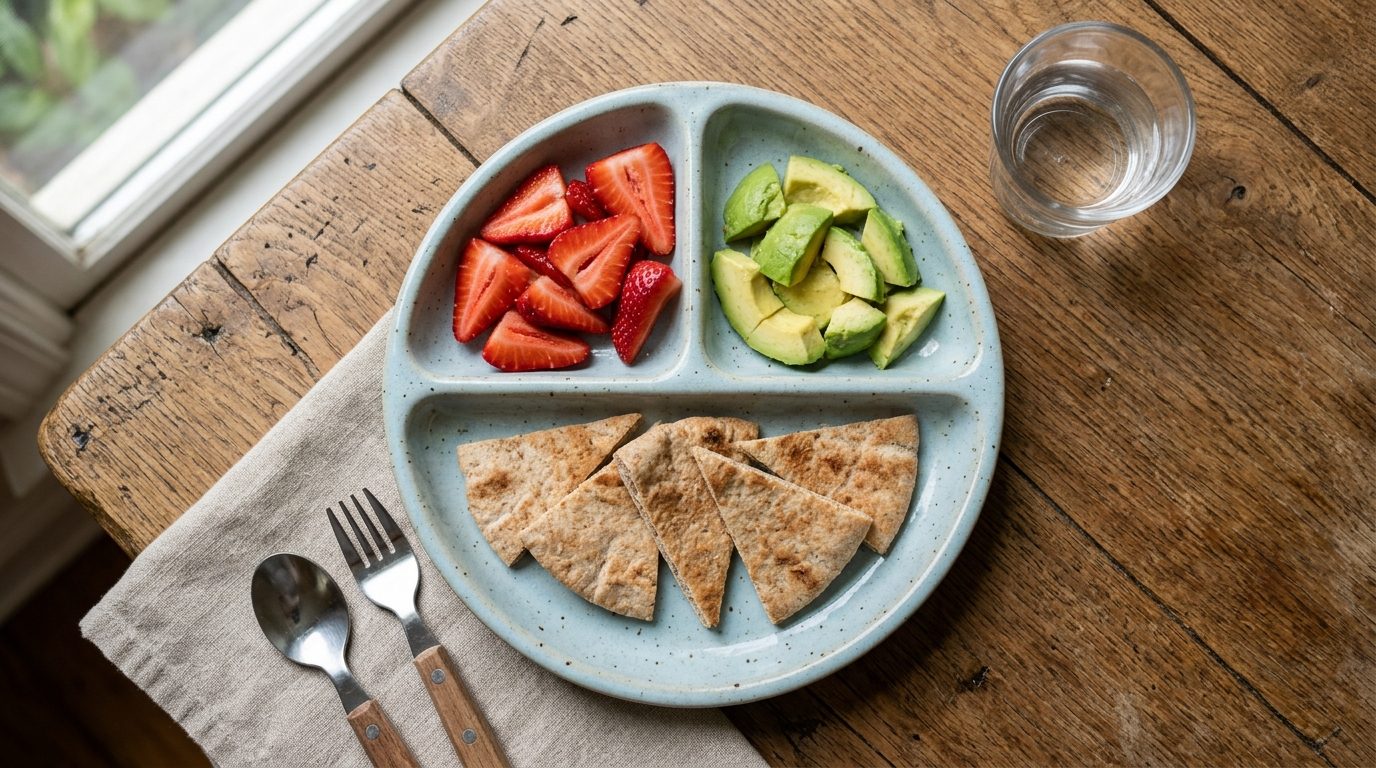
One of the most frequent mistakes well-meaning parents make is serving adult-sized portions on a toddler’s plate. Towering mountains of food overwhelm a young child’s senses and trigger immediate anxiety. When confronted with large quantities, selective eaters often push the plate away entirely without attempting a single bite.
Guidance on HealthyChildren.org suggests serving sizes such as one tablespoon of cooked vegetables per year of age. Starting with modest portions encourages curiosity and empowers your child to ask for seconds if hunger persists.
Essential Macronutrients and Micronutrients
Every balanced meal should feature three fundamental building blocks: protein, wholesome carbohydrates, and healthy fats. Protein provides vital amino acids that support rapid muscular development and tissue repair. Carbohydrates supply immediate, digestible energy for active physical play and brain growth.
Healthy fats, such as olive oil, mashed avocado, and dairy, provide important energy for growing toddlers. Offering a colorful variety of seasonal produce ensures adequate vitamin A, vitamin C, and dietary fiber. For a comprehensive overview of daily nutritional targets, consult our guide on picky toddler nutrition.
Texture Modifications and Choking Safety
Safety must always remain the top priority when preparing foods for young children. The Centers for Disease Control and Prevention provides vital choking prevention guidelines on CDC.gov to help parents prepare safe finger foods.
Always modify food textures carefully before serving, cutting foods into smaller pieces and mashing soft foods to make them easier to chew. Avoid hard, crunchy, or tough foods that require advanced chewing.
Managing Snacking and Preventing Grazing Habits
All-day grazing is the single greatest barrier to establishing a successful toddler feeding schedule in modern households. When children are allowed to carry snack pouches, crackers, or milk cups around the living room throughout the day, their stomachs never experience true fullness or genuine hunger. As a result, they arrive at the dinner table with zero biological drive to eat.
Transitioning from mindless grazing to seated table snacks supports healthy appetite regulation. To eliminate grazing, designate the family dining table or highchair as the location for eating food. When snack time arrives, invite your child to sit down and enjoy their food without screens or toys. After twenty minutes, clear the plate calmly until the next scheduled meal or snack.
Pediatric Feeding Boundaries and Division of Responsibility
Establishing regular meal times requires clear parental boundaries paired with profound respect for your child’s internal cues. In the division of responsibility in feeding, parents decide what food is served, when it is served, and where it is served.
Conversely, the child retains full autonomy over whether to eat and how much to eat from the foods provided. If your child chooses not to eat at a particular meal, maintain a calm, neutral demeanor without showing anger or frustration. Simply clear the table and remind them gently that the next snack will arrive in two hours. Trusting your child’s appetite builds lifelong intuitive eating habits and prevents destructive food power struggles.
Frequently Asked Questions
How many times a day should a toddler eat?
Most toddlers do well eating three main meals and two planned snacks each day. Maintaining a predictable daily routine ensures children rebuild genuine hunger before each meal.
What should I do if my toddler refuses to eat at a scheduled meal?
If your toddler refuses to eat at a scheduled meal, calmly accept their decision without offering short-order backup foods or negotiating bites. Clear their plate after twenty minutes and reassure them that the next planned snack will be served in a couple of hours. Allowing your child to feel natural hunger cues encourages better appetite at the next table sitting.
Can a toddler drink milk between scheduled meals?
Offering milk right before a meal can fill small stomachs with liquid calories and lead to solid food refusal. Parents can offer water or milk with meals and snacks, while saving constant sipping between eating times for water.
When should parents talk to a pediatrician about feeding difficulties?
Parents should talk to your pediatrician if meal refusal is accompanied by weight loss, poor growth percentiles, or severe lethargy. You should also consult a doctor if your child chokes frequently, coughs during meals, or has ongoing difficulty with feeding. A medical professional can assess physical development and provide individualized feeding guidance.