Offering toddler friendly iron foods helps parents safeguard vital brain development, sustain active daily energy, and prevent anemia in selective young eaters. By incorporating tender meats, fortified grains, and iron-rich plant sources paired with vitamin C, caregivers can easily meet daily nutritional requirements without mealtime battles.
Iron is an essential micronutrient that plays a central role in childhood development. It carries oxygen throughout the bloodstream, fuels rapid neural growth, and strengthens developing immune systems. Yet iron deficiency remains one of the most common nutritional gaps during the early childhood years. When children transition from iron-fortified infant formulas or purees to solid family foods, their intake of iron-dense ingredients often drops significantly.
For parents of selective eaters, ensuring adequate mineral intake can feel particularly daunting. If your child rejects chewy steaks or turns away from dark leafy greens, panic is understandable. Fortunately, exploring gentle feeding frameworks within toddler picky eating reveals numerous approachable, kid-tested ingredients that supply ample iron without stress.
Clinical guidance from the American Academy of Pediatrics on HealthyChildren.org stresses the importance of iron in preventing childhood anemia and supporting active growth. Understanding how to present this vital mineral in appealing, manageable formats ensures your growing child stays energized and thriving.
Why Growing Toddlers Need Adequate Daily Iron
Early childhood is a period of rapid development and growth. Iron is an essential mineral required to build healthy red blood cells and support normal cognitive and motor development in young children.
Physical stamina also depends directly on iron status. Hemoglobin, the iron-containing protein in red blood cells, transports oxygen from the lungs to working muscles and tissues. When iron stores become depleted, children may exhibit pale skin, decreased energy, and reduced physical stamina.
Furthermore, early childhood appetite often behaves like a paradox: low iron levels frequently cause a loss of appetite, which in turn leads to even lower mineral intake. Identifying and resolving iron gaps early prevents this subtle cycle from taking root.
Understanding Daily Requirements and Signs of Fatigue
Most healthy toddlers require seven milligrams of dietary iron each day to support optimal growth. While this number sounds modest, achieving it requires intentional food planning, especially if a child eats small, selective portions. Children who consume excessive cow milk are at heightened risk of deficiency, as excess calcium can interfere with dietary mineral absorption.
Common signs of iron deficiency noted by the AAP include pale skin, irritability, fatigue, weakness, or pica (eating non-food items like dirt or ice). If you notice any of these signs, talk to your pediatrician, who can evaluate your child and perform routine screening (the AAP recommends hemoglobin screening around 12 months of age).
The Two Forms of Dietary Iron: Heme Versus Non-Heme
Dietary iron exists in two distinct biological forms: heme and non-heme. Heme iron is derived from animal tissue, such as poultry, beef, and seafood. The human digestive tract absorbs heme iron with high efficiency, taking up fifteen to thirty-five percent of the mineral present.
Non-heme iron comes from plant sources, including beans, fortified grains, seeds, and leafy greens. Non-heme iron is absorbed less readily by the body, typically at rates between two and twenty percent. However, pairing plant sources with vitamin C dramatically increases absorption, making plant options powerful nutritional tools.
Top Heme Sources That Cautious Eaters Readily Accept
Chewing tough meat is one of the most common reasons young children reject animal proteins. Toddler jaw muscles are still developing, and chewing dry chicken breast or steak can be physically exhausting. The secret to serving heme iron successfully is prioritizing ultra-tender, moist textures.
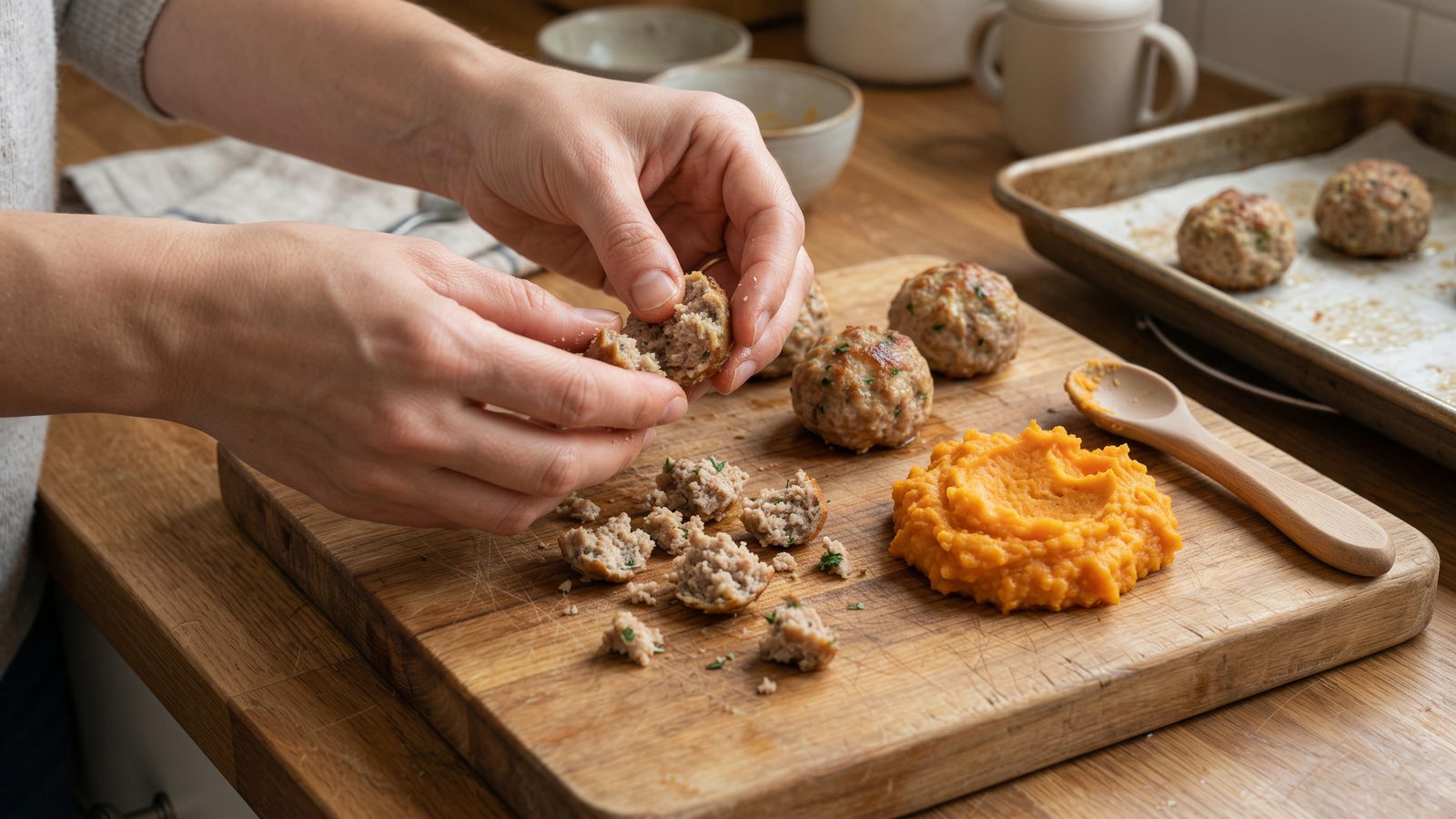
Ground meats are far more manageable for little mouths than whole cuts. Soft baked turkey meatballs cut into small bite-size pieces and simmered in mild tomato sauce, tender ground beef crumbles mixed into buttered pasta, or slow-cooked shredded chicken thighs are readily accepted by cautious toddlers. To prevent choking, always supervise meals, cut foods into small pieces, and avoid hard or slippery foods for children under 4.
Parents navigating meat refusal can also read our specialized guide on how to support a child when a toddler refuses to eat meat. Exploring gentle texture modifications helps children enjoy savory animal proteins with confidence.
Serving Soft Shredded Meats and Tender Finger Patties
Making mini meat patties or small sliders is an excellent way to serve animal proteins. Blend ground poultry with finely grated zucchini or sweet potato puree to create extraordinarily soft, moist finger foods that toddlers can easily hold and bite. Dipping these patties into mild fruit applesauce or hummus adds playful sensory engagement.
Canned light tuna (served in age-appropriate, limited portions to manage mercury) or canned salmon mixed with mashed avocado or plain whole milk yogurt also provides tender, easily chewable heme iron alongside essential fatty acids.
Incorporating Eggs into Breakfast and Lunch
Whole eggs provide valuable iron, high-quality protein, and choline for cognitive development. While egg whites contain protein, the iron is concentrated inside the rich golden yolk. Scramble eggs softly with a splash of milk and a sprinkle of shredded cheese to create a comforting, familiar table staple.
You can also bake vegetable egg cups in mini-muffin tins, creating portable protein bites that store well in the refrigerator for quick weekday breakfasts.
Plant-Based Iron Sources and Gentle Meal Pairings
Plant-based sources provide incredible variety and gentle textures that selective children often adore. Legumes are an outstanding plant source of dietary iron. Soft black beans, lentils, and chickpeas can be gently mashed and spread onto whole grain toast points or warm flour tortillas.
Fortified cereals and grains are another dependable way to boost daily mineral intake. A morning bowl of warm iron-fortified infant oatmeal or rolled oats topped with fruit puree delivers a substantial portion of your child’s daily requirement in a familiar, comforting format.
Learn more about broad nutritional balance in our detailed guide on picky toddler nutrition to evaluate weekly dietary intake without daily stress.
Boosting Nutrient Absorption with Vitamin C Rich Foods
To maximize the benefits of non-heme plant iron, always pair plant sources with foods rich in vitamin C. Vitamin C significantly improves non-heme iron absorption in the digestive tract, helping the body take up more of the mineral from plant-based foods.
Simple pairing ideas include adding sliced strawberries to morning fortified oatmeal, serving steamed sweet bell pepper cut into small bite-size pieces alongside hummus and soft whole wheat pita, or tossing steamed broccoli florets with bean pasta. These colorful combinations enhance both flavor and nutrient bioavailability.
Conversely, avoid serving large cups of cow milk alongside iron-rich meals. Calcium and polyphenols can compete with iron for absorption pathways in the intestine. Save milk for between-meal snacks, and serve water with meals containing iron.
Managing Milk Intake to Protect Healthy Mineral Stores
Excessive consumption of cow milk is a common dietary contributor to iron deficiency in young children. Toddlers who drink twenty-four to thirty-two ounces of milk daily often fill their stomachs completely with liquid calories, leaving no room for solid foods rich in iron.
AAP-based guidance recommends about 16 ounces of cow milk daily for toddlers aged 12 to 24 months, and no more than 16 to 24 ounces daily for children older than 24 months, as excess milk intake can displace iron-rich solid foods.
Feeding guidelines from the American Academy of Pediatrics on HealthyChildren.org encourage parents to offer a variety of nutritious foods and let the child decide how much to eat. If you ever have persistent concerns about your child’s physical growth, unusual paleness, or chronic lethargy, talk to your pediatrician for guidance.
Frequently Asked Questions
How much iron does a toddler need each day?
Toddlers aged one to three require approximately seven milligrams of dietary iron each day to support healthy blood production and cognitive development. This requirement can be met through a balanced combination of tender animal proteins, fortified grains, and plant-based foods.
What should you do if your toddler refuses all red meat?
If your child rejects red meat, offer tender alternative iron sources such as shredded dark meat poultry, mashed lentils, eggs, and iron-fortified oatmeal. Pairing plant sources with vitamin C rich fruits significantly enhances mineral absorption.
Can drinking too much cow milk cause low iron in toddlers?
Yes, consuming excess cow milk—more than 16 to 24 ounces daily depending on age—can displace iron-rich solid foods and inhibit mineral absorption. Limiting milk intake to recommended levels and serving water with meals protects healthy iron stores.
When should parents ask a pediatrician for an anemia screening?
Parents should talk to your pediatrician if a child displays unusual pale skin, persistent fatigue, irritability, or poor physical stamina. Your pediatrician can perform a routine hemoglobin screening and decide if further testing is needed to evaluate iron status.